Planning an event under a tent? A 20x20 tent is a popular choice for smaller gatherings, providing shelter and a defined space for your celebration. But maximizing that space with the right table layout can be tricky. You want your guests to be comfortable, have enough room to move around, and still foster a sense of intimacy. This guide will walk you through everything you need to know to create the perfect 20x20 tent table layout, ensuring your event is a success.
Key Takeaways
- Careful planning is crucial for maximizing space in a 20x20 tent.
- Consider the type of event, guest count, and table shapes when designing your layout.
- Utilize online seating chart tools like SeatingChartCreator.com to visualize and adjust your layout.
- Prioritize guest comfort and flow of movement within the tent.
- Common mistakes like overcrowding and neglecting walkways can easily be avoided with proper planning.
Why is Your 20x20 Tent Table Layout So Important?
The table layout isn't just about where tables go; it's about creating an atmosphere. It influences how your guests interact, how easily they can move around, and ultimately, how much they enjoy your event. A well-planned layout can make a small space feel larger and more inviting. Conversely, a poorly planned layout can make even a beautiful tent feel cramped and uncomfortable.
Design Your Perfect Seating Chart
Free drag-and-drop seating chart creator for weddings, events, and venues. Export professional PDFs in minutes.
Create Free Seating ChartThink about it: are you hosting a formal dinner, a casual cocktail party, or a lively dance? Each type of event requires a different approach to table arrangement and spacing. Consider the flow of traffic, the location of the bar, dance floor, and buffet, and how these elements interact with your table arrangement. All of these factors play a critical role in the overall success of your event.
What happens when you don't put enough thought into your 20x20 tent table layout? Guests might feel cramped and unable to easily converse. Servers might have difficulty navigating between tables, leading to delays in service. You might even run the risk of violating fire safety codes if aisles are too narrow. Taking the time to plan and visualize your layout beforehand will save you from headaches and ensure a smooth and enjoyable event for everyone.
Understanding the Dimensions: How Much Space Do You Really Have?
A 20x20 tent provides 400 square feet of usable space. However, it’s crucial to remember that this is the maximum space. Factors like the tent's support poles, any sidewalls you add, and the placement of your entrance can all impact the actual usable area. Before you even start thinking about tables, grab a measuring tape and get the exact interior dimensions of your tent setup.
Don't just measure the length and width; pay attention to the height of the tent as well. Lower ceilings can make a space feel smaller, which can influence your table choices. Taller tents offer more headroom and create a feeling of spaciousness. Factor this in as you consider decor and lighting as well; you don't want hanging decorations to obstruct sightlines or create a hazard.
Once you have your measurements, create a scaled diagram of your tent. This could be a simple hand-drawn sketch or a digital model using a program like SeatingChartCreator.com. This visual representation will be invaluable as you start experimenting with different table arrangements. It’s much easier to move tables around on paper (or on screen!) than it is to physically rearrange them on the day of your event.
Choosing the Right Tables: Round vs. Rectangular vs. Square
The shape of your tables is a key factor in determining how many guests you can comfortably accommodate in your 20x20 tent. Each shape has its own set of advantages and disadvantages, so it's important to choose the ones that best suit your event style and guest count.
Round Tables
- Promote conversation among guests
- Create a more formal and elegant atmosphere
- Require more space compared to rectangular tables
Rectangular Tables
- More space-efficient, maximizing seating capacity
- Suitable for a more modern or casual setting
- Can be easily arranged in rows for a banquet-style setup
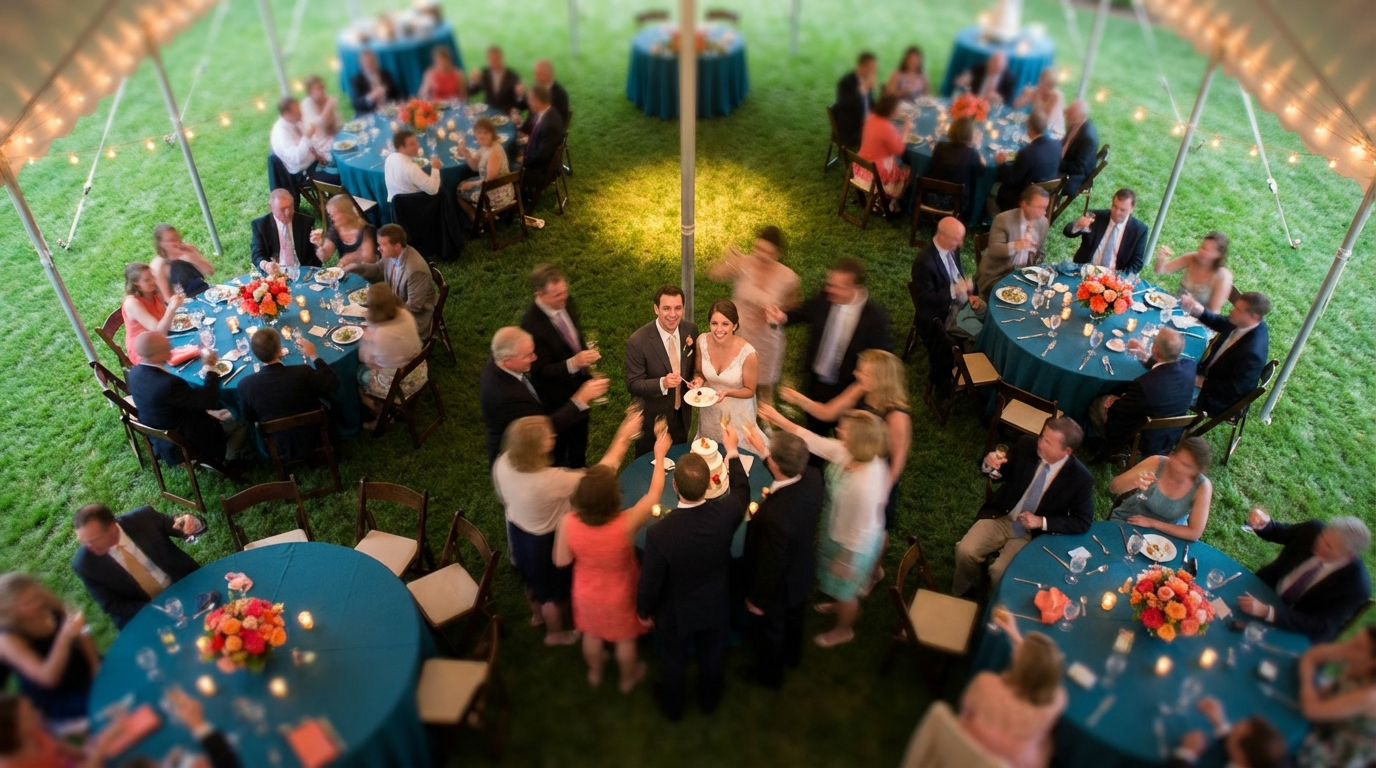
Round tables are a classic choice for weddings and formal events. They encourage conversation, as everyone at the table can easily see and interact with each other. However, they do require more space per person than rectangular tables. A standard 60-inch round table can comfortably seat 8-10 guests, while a 72-inch round table can accommodate 10-12 guests.
Rectangular tables are a more space-efficient option, making them ideal for smaller tents or events with a larger guest list. They're also versatile and can be arranged in a variety of configurations, such as long rows for a banquet-style setting or grouped together to create larger seating areas. Keep in mind that rectangular tables might not be as conducive to conversation as round tables, particularly if they are very long. Consider placing centerpieces strategically to encourage interaction.
Square tables are a less common choice, but they can work well for smaller, more intimate gatherings. They offer a good balance between conversation and space efficiency. However, they can be challenging to arrange in a larger tent, as they don't always fit neatly together. Experiment with different arrangements to see if square tables are the right fit for your event.
Step-by-Step Guide: Creating Your 20x20 Tent Table Layout
Ready to start planning your 20x20 tent table layout? Here’s a step-by-step guide to help you create a functional and visually appealing space.
Determine Your Guest Count
This is the foundation of your entire layout. Knowing exactly how many guests you need to accommodate will determine the size and number of tables you'll need.
Choose Your Table Shape and Size
Based on your guest count and the desired atmosphere, select the table shape and size that best suits your needs. Refer to the information above to weigh the pros and cons of each option.
Create a Scaled Diagram of Your Tent
As mentioned earlier, this is a crucial step. Use a measuring tape to get the exact interior dimensions of your tent and create a scaled drawing or digital model. Include the placement of any support poles or other obstructions.
Experiment with Different Layouts
Now comes the fun part! Start arranging your tables within your scaled diagram. Try different configurations and see how they impact the flow of traffic and the overall feel of the space. Utilize a free online tool like SeatingChartCreator.com to easily drag-and-drop tables and visualize different arrangements.
Consider Other Elements
Don't forget to factor in other elements of your event, such as the dance floor, bar, buffet, and any entertainment areas. Make sure these elements are strategically placed and easily accessible to your guests.
Finalize Your Layout and Share It
Once you're happy with your layout, finalize it and share it with your event team, including caterers, decorators, and the tent rental company. This will ensure everyone is on the same page and that the setup goes smoothly on the day of your event.
Maximizing Space: Clever Layout Strategies for Your Tent
Even with careful planning, fitting everything you need into a 20x20 tent can be a challenge. Here are some clever layout strategies to help you maximize space and create a comfortable environment for your guests.
- Optimize Aisle Width: Aim for at least 3 feet of space between tables to allow guests and servers to move around comfortably. In high-traffic areas, such as near the bar or buffet, increase the aisle width to 4-5 feet.
- Utilize Vertical Space: If your tent has high ceilings, take advantage of vertical space with tall centerpieces, hanging decorations, or lighting fixtures. This will draw the eye upward and create a feeling of spaciousness.
- Consider a Cocktail-Style Setup: For a more casual event, opt for a cocktail-style setup with fewer tables and more standing areas. This will encourage guests to mingle and move around the tent more freely.
Another strategy is to use smaller tables. Instead of large 60-inch or 72-inch round tables, consider using 48-inch tables that seat 6-8 guests. This will allow you to fit more tables into the tent without overcrowding the space.
Don't forget about the perimeter of the tent. If you have sidewalls, you can utilize the space along the walls for things like buffet tables, bars, or photo booths. Just make sure to leave enough room for guests to walk around the perimeter without feeling cramped.
Essential Considerations: Dance Floor, Buffet, and More
Your table layout is only one piece of the puzzle. You also need to consider the placement of other essential elements, such as the dance floor, buffet, bar, and any entertainment areas. These elements should be strategically placed to complement your table layout and create a cohesive and functional space.
The dance floor should be large enough to accommodate a reasonable number of dancers, but not so large that it dominates the tent. Position it in a central location that is easily accessible from all tables. Consider the acoustics of the tent when placing the dance floor, as sound can easily bounce off the tent walls.
The buffet should be placed in a location that is convenient for guests to access, but doesn't create a bottleneck. Consider setting up multiple buffet stations to reduce congestion. Make sure there is ample space around the buffet tables for guests to move around and serve themselves comfortably.
The bar should be located in a high-traffic area, but not so close to the dance floor that it interferes with the music. Consider setting up multiple bars to reduce wait times. Make sure the bar area is well-lit and has plenty of space for bartenders to work efficiently.
Before You Start
- Finalize guest headcount
- Confirm dimensions of the 20x20 tent (including pole locations)
- Decide on the style of event (formal, casual, cocktail)
- Determine budget for tent accessories (linens, lighting, etc.)
Example Layouts: 20x20 Tent Table Arrangement Ideas
Need some inspiration? Here are a couple of example 20x20 tent table layouts to get you started.
Layout 1: Formal Dinner (Round Tables)
- 5 x 60-inch round tables (8 guests per table)
- Total guest capacity: 40
- Central dance floor
- Buffet along one side of the tent
Layout 2: Casual Cocktail Party (Rectangular Tables)
- 4 x 6-foot rectangular tables (6 guests per table)
- Total guest capacity: 24 (plus standing room)
- High-top cocktail tables scattered throughout
- Bar along one side of the tent
These are just examples, of course. The best layout for your event will depend on your specific needs and preferences. The key is to experiment with different arrangements and see what works best for your space and guest list. Remember to use SeatingChartCreator.com to visualize your layout and make adjustments as needed.
When considering the arrangements, also think about accessibility. Ensure that guests with mobility issues can easily navigate the tent and access all areas, including the restrooms, buffet, and dance floor. This might mean providing wider aisles or designated seating areas.
Common Mistakes to Avoid: Don't Cramp Your Style!
Even with careful planning, it's easy to make mistakes when designing your 20x20 tent table layout. Here are some common pitfalls to avoid.
- Neglecting Walkways: Make sure there are clear and unobstructed walkways throughout the tent. Guests should be able to move around easily without bumping into tables or chairs.
- Ignoring Line of Sight: Consider the line of sight from each table. Guests should be able to see the dance floor, stage, or any other focal points without obstruction.
- Forgetting About Power Outlets: Make sure there are enough power outlets to accommodate all of your electrical needs, such as lighting, sound equipment, and catering equipment.
Expert Advice: Tips for a Flawless Tent Layout
Want to take your 20x20 tent table layout to the next level? Here are some expert tips to help you create a truly memorable event.
Consider the time of day and the direction of the sun. If your event is during the day, position the tent so that the sun doesn't shine directly into guests' eyes. This can be achieved by orienting the tent in a specific direction or by using sidewalls to block the sun.
Use lighting to create ambiance. String lights, lanterns, and spotlights can all be used to create a warm and inviting atmosphere. Experiment with different lighting schemes to see what works best for your event.
Don't be afraid to get creative with your table arrangements. There are no hard and fast rules when it comes to table layouts. Experiment with different configurations and see what works best for your space and your event style.
Frequently Asked Questions
The number of tables that can fit in a 20x20 tent depends on the size and shape of the tables, as well as the desired spacing between them. As a general guideline, you can typically fit 5-6 round tables (60-inch) or 4-5 rectangular tables (6-foot) comfortably. Use SeatingChartCreator.com to experiment with different layouts and find the best configuration for your event.
Get Event Planning Tips
Weekly tips on seating arrangements, event layouts, and planning strategies.
SeatingChart Team
Our team of event planning experts is dedicated to helping you create unforgettable events with perfect seating arrangements.
Ready to Create Your Seating Chart?
Start planning your perfect event layout with our free drag-and-drop seating chart creator. No sign-up required to try it out!
Try Free Seating Chart Creator